Why Choose a Commercial Fan for Your Business?

Time:2026-10-03 Author:Oliver
0%

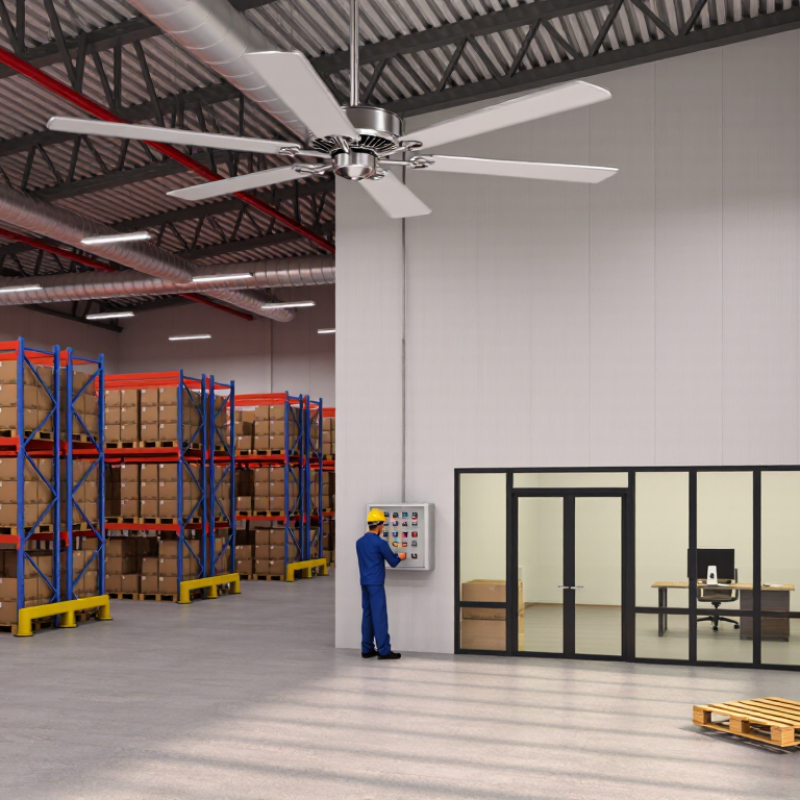
Choosing a commercial fan is not simply about moving the most air. It means matching airflow, room size, working conditions, and operating costs. In a busy warehouse, a suitable fan can reduce stagnant heat near an eight-meter ceiling. In a restaurant, it may need to handle grease, moisture, and long operating hours. The wrong model can create noise, drafts, or unnecessary energy use. That becomes expensive.

A dependable decision starts with measurable details. Check ceiling height, floor area, target air changes, temperature, humidity, and available electrical capacity. Compare airflow ratings under realistic resistance, not just the largest number on the box. Review motor efficiency, controls, guarding, cleaning access, and replacement-part availability. Local codes and manufacturer instructions still matter. They are not mere paperwork.

A commercial fan can support comfort, productivity, and equipment protection when installed correctly. Yet it is not a universal solution. A high-volume fan may move air without removing smoke, fumes, or humidity. Professional assessment is wise when ventilation affects health or fire safety. Budget matters, but downtime matters too. The best choice is practical, quiet enough, serviceable, and suited to daily use. Some assumptions may be wrong. Recheck them before purchase.
Why Choose a Commercial Fan for Your Business?

What Defines a Commercial Fan and How Does It Work?

A commercial fan is an air-moving machine engineered for demanding workplaces, not simply a larger household fan. It usually has a stronger motor, durable housing, and components designed for longer operating hours. Its job is practical: move air, dilute heat, control humidity, or support ventilation where people work. That distinction matters.

When powered, the motor turns blades or an impeller inside a guarded frame. The rotating parts create a pressure difference, pulling air from one side and pushing it toward another. Axial fans move air along the shaft, while centrifugal fans redirect airflow through a housing. Airflow depends on blade design, speed, resistance, and duct layout, so the advertised volume is not always the delivered volume. A dusty filter or narrow duct can reduce performance sharply.

In practical installations, technicians check airflow, noise, temperature, and vibration after setup. They also verify guards, electrical protection, clearances, and suitable duty ratings before regular use. A common mistake is choosing by motor power alone, then discovering poor circulation in corners. That is easy to miss. A careful assessment of room size, heat sources, occupancy, and mounting position provides more dependable results. Maintenance still matters: clean blades, inspect bearings, and record unusual sounds before a small fault becomes expensive.

Key Business Applications for Commercial Fans

Commercial fans support many daily business operations, from busy warehouses to compact restaurant kitchens. In warehouses, high-volume fans move stagnant air across loading bays, aisles, and packing stations. This can reduce heat buildup around workers and equipment. Air circulation also helps limit condensation near cold storage areas. Better airflow may improve comfort, but it cannot replace proper insulation or ventilation design.

Factories often use commercial fans to manage heat, fumes, dust, and moisture. Local exhaust systems should capture contaminants near their source. Large ceiling fans can then improve general air movement across the floor. In workshops, this combination may help workers stay alert during long shifts. However, fan placement matters. A poorly aimed unit can spread dust instead of controlling it.

Retail stores, gyms, agricultural buildings, and event spaces have different airflow needs. Retail managers may use quieter fans to improve comfort without disturbing customers. Gyms need steady circulation near exercise zones, where body heat rises quickly. Agricultural facilities may use fans to reduce humidity around animals, feed, and stored crops. I have found that rushed installations often overlook noise, cleaning access, and seasonal changes. That is a practical weakness worth correcting. A reliable plan considers room size, ceiling height, occupancy, heat sources, and local safety requirements before selecting fan capacity.

Why Choose a Commercial Fan for Your Business?

Key Business Applications for Commercial Fans

Commercial fans help maintain healthier, safer, and more productive work environments by supporting air movement and ventilation. The chart shows representative midpoint values from commonly published ventilation design ranges for different commercial applications. Actual requirements depend on occupancy, building layout, local regulations, heat load, and the specific ventilation system.

Source basis: commonly used air-change-per-hour guidance associated with commercial ventilation design practices, including ASHRAE 62.1 principles. Values are presented for general comparison and are not a substitute for an engineered ventilation assessment.

How Commercial Fans Improve Workplace Air Quality

Why Choose a Commercial Fan for Your Business?

Workplace air quality depends on more than opening a window. Commercial fans help move stale air, reduce hot spots, and support mechanical exhaust systems. The U.S. Environmental Protection Agency reports that indoor pollutant levels can be two to five times higher than outdoor levels, and sometimes much higher. Stagnant air feels heavy. In a busy workshop, air movement can also reduce heat discomfort near machinery, ovens, or crowded workstations.

Fans work best when airflow follows a clear path. Place them near doors, high-level exhaust points, or areas where heat collects. Avoid blowing air directly across dusty surfaces. That can spread particles instead of removing them. ASHRAE Standard 62.1-2022 bases ventilation requirements on occupancy, floor area, and space use. A fan should support those requirements, not replace outdoor-air ventilation. Placement matters.

The U.S. Centers for Disease Control and Prevention recommends improving ventilation and using filtration to reduce airborne contaminants. A commercial fan can improve circulation, but it cannot capture fine particles or eliminate chemical vapors. Fans are not filters. Managers should check airflow direction, noise levels, cleaning schedules, and worker comfort regularly. An inexpensive airflow test may reveal dead zones that people cannot see. The honest limitation is important: stronger airflow is not automatically cleaner air. Practical results depend on fan selection, room layout, maintenance, and the actual contaminants present.

Factors to Consider When Choosing a Commercial Fan

Choosing a commercial fan starts with the space, not the catalogue. Measure room volume, ceiling height, heat sources, occupancy, and required air changes. The U.S. Department of Energy reports that fan systems can represent about 15% of electricity use in American manufacturing. Efficiency deserves attention.

Match airflow to the application. Warehouses often need broad, gentle circulation, while workshops may require higher static pressure for ducted extraction. Check the fan curve at the actual operating point. A rated airflow number alone can mislead. ASHRAE guidance also stresses ventilation effectiveness, temperature control, and acceptable noise levels. A fan that moves air but disturbs workers is poorly selected.

Control options matter. Variable-speed drives can reduce energy during partial-load periods, although savings depend on correct commissioning. Consider motor efficiency, control compatibility, dust exposure, moisture, mounting strength, and access for cleaning. AMCA testing standards help compare certified air-performance data rather than optimistic estimates. I have seen projects focus on purchase price and overlook access above a crowded production line. That mistake becomes expensive. Recheck sound levels at the occupied work area, not only beside the fan. Maintenance schedules should include bearings, guards, fasteners, and electrical connections. A slightly higher-cost unit may deliver better lifecycle value, but only when its duty point and operating hours are documented.

Installation, Maintenance, and Operating Cost Considerations

Installation, Maintenance, and Operating Cost Considerations

A commercial fan must match the building, not merely move the most air. The U.S. Department of Energy reports that fan systems can represent about 15% of electricity use in manufacturing facilities. Correct sizing can therefore influence long-term operating costs. A site survey should check ceiling height, airflow paths, dust levels, noise limits, and available electrical capacity. Poor placement may create stagnant corners and increase energy use.

Installation quality matters. Technicians should verify structural supports, guards, wiring, controls, and vibration levels before commissioning. ASHRAE Standard 90.1 includes fan-power requirements for many commercial systems. Variable-speed control can reduce energy demand during cooler periods. Fan affinity laws show that power changes roughly with the cube of speed. Small speed reductions can matter.

Maintenance is less glamorous. It still protects the budget. Filters, belts, bearings, blades, and electrical connections need scheduled inspection. Dust buildup can reduce airflow and increase motor strain. The National Association of Energy Service Companies recommends tracking equipment performance through measured energy and airflow data. A simple log can reveal rising costs early. Yet maintenance plans are often too generic. Operating hours, seasonal loads, and neglected access points deserve a more honest review. A low purchase price may hide difficult servicing and higher lifetime expense.

FAQS

What is a commercial fan?

It is an air-moving machine built for demanding workplaces. It usually has a stronger motor and tougher housing. It supports long operating hours. It can reduce heat, humidity, or stagnant air.

How does a commercial fan move air?

A motor turns blades or an impeller inside a guarded frame. The rotating parts create a pressure difference. Air enters one side and leaves another. Axial models move air along the shaft. Centrifugal models redirect air through a housing.

Does advertised airflow equal delivered airflow?

Not always. Dusty filters, narrow ducts, and sharp bends can reduce airflow. Blade design and resistance also matter. A large number on paper may disappoint in practice.

Where are commercial fans commonly used?

They serve warehouses, factories, workshops, kitchens, gyms, stores, and agricultural buildings. In warehouses, they move air across aisles and loading areas. In gyms, they circulate warm air near exercise zones. Different rooms need different airflow plans.

Can a fan control dust and fumes?

It can help, but placement is critical. Local exhaust should capture contaminants near their source. Large fans can support general circulation afterward. A poorly aimed fan may spread dust instead. That is a real weakness.

How should a workplace choose fan capacity?

Check room size, ceiling height, occupancy, heat sources, and airflow paths. Also review dust levels, noise limits, and electrical capacity. Do not choose by motor power alone. Corners may remain still and uncomfortable.

What should technicians check during installation?

They should inspect structural supports, guards, wiring, controls, and clearances. They should also measure vibration, temperature, noise, and airflow. The mounting position needs practical review. A rushed setup can create problems later.

How can businesses reduce fan operating costs?

Correct sizing prevents unnecessary energy use. Variable-speed control can reduce demand during cooler periods. Small speed reductions may produce meaningful savings. The exact result depends on the building. Guessing is not enough.

What maintenance does a commercial fan need?

Inspect filters, belts, bearings, blades, and electrical connections regularly. Clean dust from blades before motor strain increases. Record unusual sounds and rising vibration. A simple log can reveal trouble early. Maintenance is easy to postpone.

What hidden costs should buyers consider?

A low purchase price may hide difficult servicing or poor access. Long operating hours can increase energy expenses. Noise, cleaning time, replacement parts, and seasonal loads also matter. The cheapest choice may not stay cheap.

Conclusion

A commercial fan is a powerful air-moving system designed for demanding business environments such as warehouses, workshops, retail spaces, kitchens, offices, and agricultural facilities. Unlike ordinary household fans, it is built for longer operating hours, larger areas, and more challenging conditions. By circulating air efficiently, a commercial fan can support ventilation, reduce heat buildup, control humidity, and improve comfort for employees and visitors. It may also help remove odors, airborne particles, and stagnant air when used as part of a suitable ventilation plan.

Choosing the right model requires careful consideration of airflow capacity, coverage area, noise level, energy efficiency, durability, mounting options, and environmental conditions. Businesses should also evaluate installation requirements, safety clearances, controls, and expected maintenance needs. Regular cleaning, inspection, and timely replacement of worn components can extend service life and maintain performance. Although the initial cost may be higher than that of a residential unit, an efficient commercial fan can reduce cooling demands, improve workplace conditions, and provide long-term operating value.


Oliver

Oliver

Oliver is a seasoned marketing professional with a wealth of expertise in driving brand awareness and engagement. With a deep understanding of our company's product offerings, he consistently delivers high-quality content that enriches our professional blog. His insights not only shed light on......