Why Choose a Direct Drive Low-Speed Motor? The answer begins with energy, torque, and system simplicity. Motor-driven equipment consumes a substantial share of industrial electricity, according to the International Energy Agency’s Energy Efficiency 2023 report. The U.S. Department of Energy also reports that motor systems use more than half of electricity in American manufacturing. These figures make drivetrain efficiency a practical operating concern, not merely a design preference.
A Direct drive low-speed motor connects directly to the driven load. It removes the gearbox, coupling, and several wear points. Picture a conveyor turning steadily at 60 revolutions per minute, without gear teeth generating noise or requiring regular oil changes. This arrangement can deliver high torque at low speed, improve controllability, and reduce mechanical losses. The European Commission’s energy-efficiency studies consistently identify motor systems and variable-speed operation as important saving opportunities. In suitable applications, direct drive can also simplify maintenance access and reduce the number of replacement parts.
The decision is not automatic. Higher purchase costs, inverter requirements, cooling limits, and installation constraints deserve careful review. Thermal performance may change when the motor operates slowly for long periods. That detail is easy to miss. Engineers should compare the complete system, including electricity, maintenance, downtime, and expected service life. IEC 60034 efficiency classifications provide a useful reference, but they cannot replace application testing. A direct-drive design may deliver excellent results on pumps, mixers, conveyors, and hoists. It may be unsuitable where speed range, shock loads, or space limitations dominate. The most reliable choice comes from measured load data, not marketing language.
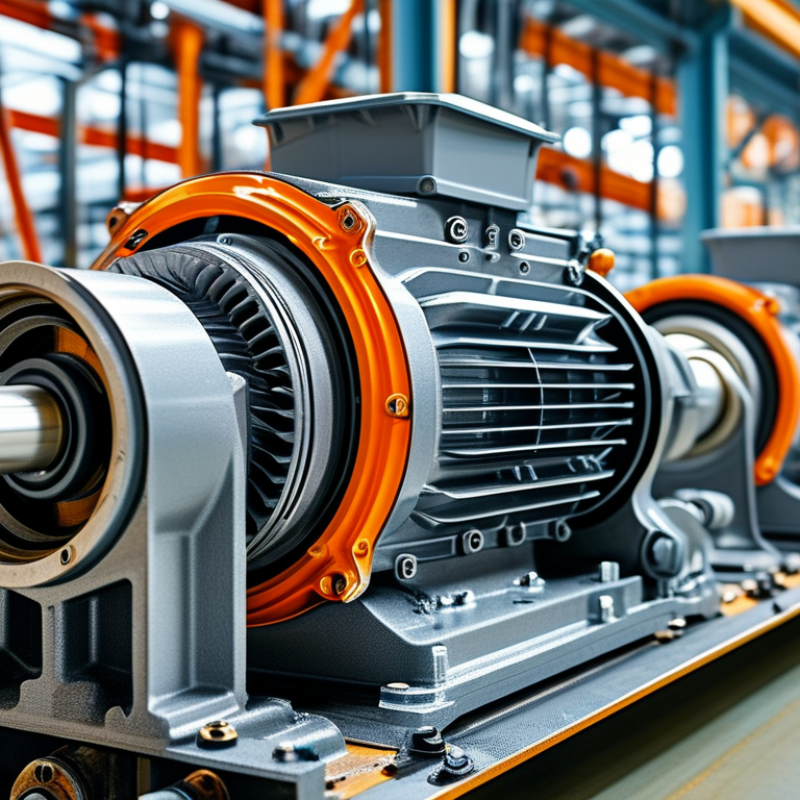
A direct drive low-speed motor is an electric motor connected directly to its load. It does not need a gearbox to reduce speed. The motor shaft turns the conveyor, drum, mixer, or wheel at the required operating speed. This arrangement can deliver high torque at low revolutions. It also removes gears, belts, and several wear points.
The design usually uses a large rotor and precise electronic control. A position sensor can monitor shaft movement every moment. In a conveyor application, the motor may run steadily at 30 to 300 revolutions per minute, depending on its structure and control system. Fewer mechanical parts often mean less noise and simpler maintenance. That sounds ideal.
However, the term “direct drive” can mislead. It does not guarantee lower energy use in every installation. A direct drive motor may be larger, heavier, and more expensive than a geared alternative. Its starting torque, cooling method, bearing load, and control requirements need careful checking. I would also examine the load profile, not only the rated speed. A motor that performs well during steady operation may respond poorly to frequent starts, sudden impacts, or rapid reversing. Practical testing matters. Small design assumptions can become costly problems.
A direct drive low-speed motor connects directly to the driven machine. There is no gearbox between the shaft and the load. Its rotor uses many magnetic poles, producing high torque at low rotational speed. An inverter controls current frequency and direction, so the motor can start smoothly and hold steady torque. This arrangement removes gear teeth, oil, seals, and several mechanical losses.
Less vibration matters. But direct drive is not automatically superior. The motor may be larger and more expensive initially. Its inverter, cooling path, and control settings require careful engineering. During commissioning, technicians should record torque, speed, winding temperature, and input power under real loads. A 2023 industrial motor systems assessment from the U.S. Department of Energy stresses system-level efficiency, not motor efficiency alone. That distinction is important.
I would not trust a catalogue percentage without measured operating data. Dust, overloads, poor alignment, or frequent speed changes can still reduce performance. The design looks simple. The engineering is not.
Electric motor systems consume about 45% of global electricity, according to International Energy Agency analysis. That figure makes every mechanical loss worth examining. A direct drive low-speed motor connects the rotor directly to the load. It removes gears, shafts, and extra couplings from the power path. Fewer interfaces can mean fewer losses. It can also reduce backlash, vibration, and audible noise around the machine.
Maintenance becomes more practical. There are no gearbox teeth to inspect or oil to replace. In a dusty workshop, this matters. A sealed motor can keep running beside a conveyor without scheduled lubricant changes. The U.S. Department of Energy reports that motor-driven equipment represents more than half of industrial electricity use. Even modest efficiency gains can therefore influence operating costs, especially during long production cycles.
A larger motor may be required. Direct drive systems can deliver high torque at low speed, but their initial cost and control requirements may increase. Engineers should compare total lifecycle performance, not only purchase price. Load profile, bearing life, cooling, and inverter efficiency need careful review. I have seen projects focus on removing the gearbox while overlooking low-speed heat rejection. That is an expensive lesson. When correctly matched, direct drive technology offers a simpler torque path, fewer wear components, and steadier long-term operation.
Why Choose a Direct Drive Low-Speed Motor?
Factors to Consider When Choosing a Low-Speed Motor
A direct drive low-speed motor connects directly to the load. It removes the gearbox, reducing backlash, noise, and routine maintenance. However, selection should begin with the machine’s actual operating conditions. Measure continuous torque, peak torque, speed range, starting load, and duty cycle. A motor that looks suitable at rated speed may struggle during acceleration.
Thermal performance deserves close attention. Low-speed operation can reduce natural cooling, especially inside a sealed machine frame. Check the continuous torque curve, overload duration, insulation class, and cooling method. For example, a conveyor carrying wet aggregate may need strong starting torque and reliable protection against dust and moisture. Confirm the enclosure rating and cable arrangement before installation. Small details matter.
Control compatibility is equally important. The drive system should support accurate feedback and stable low-speed regulation. Encoders can improve positioning, but they add cost and installation requirements. Review load inertia and stopping behavior carefully. A heavy rotating drum may demand braking energy management. Direct drive does not automatically mean lower total cost. The motor may cost more initially, and repairs can require specialized technicians. In practical commissioning, engineers should compare energy use, downtime, maintenance access, and expected service life. I would also leave a safety margin, but not an excessive one. Oversizing can reduce efficiency and increase unnecessary expense. Some applications need simplicity more than maximum performance.
| Evaluation Factor | Direct Drive Low-Speed Motor | Geared Low-Speed Motor | Selection Considerations |
|---|---|---|---|
| Operating Principle | The motor produces the required low-speed torque directly at the driven shaft, without a mechanical gearbox. | A higher-speed motor is connected to a gearbox that reduces speed and increases output torque. | Direct drive is suitable when the application benefits from fewer mechanical transmission components. |
| Typical Speed Range | Commonly designed for low-speed operation, including applications below 100 revolutions per minute. The actual range depends on motor design and control method. | Often uses a standard motor operating at several hundred or more revolutions per minute, with the gearbox providing the final reduction. | Confirm the required operating speed, speed adjustment range, and allowable speed variation under load. |
| Torque Delivery | Provides torque directly at the output shaft and can deliver smooth low-speed operation without gear-mesh pulsation. | Provides high output torque through gear reduction, but torque transmission is affected by gear efficiency, backlash, and wear. | Check continuous torque, peak torque, starting torque, and the duty cycle rather than comparing motor power alone. |
| Mechanical Efficiency | Avoids gearbox losses, so mechanical transmission efficiency can be higher when the motor is correctly sized and operated. | Gearbox efficiency varies with gear type, reduction ratio, lubrication, speed, load, and operating temperature. | Calculate total system efficiency from electrical input to useful mechanical output for an accurate energy comparison. |
| Energy Consumption | May reduce energy use by eliminating gearbox losses and by operating efficiently at the required speed, especially in continuous-duty applications. | May consume more energy because of mechanical losses in the gearbox, although the total result depends on motor and gearbox sizing. | Compare measured or calculated input power at the actual load point, not only the rated motor power. |
| Backlash and Positioning | Has no gear backlash, which can improve repeatability and control in indexing, tensioning, and positioning applications. | Gear backlash may affect positioning accuracy, particularly after prolonged operation or under changing load conditions. | Direct drive is preferable when low backlash, precise speed control, or frequent reversals are important. |
| Noise and Vibration | Typically produces less mechanical noise because there are no gear teeth, gear-mesh forces, or gearbox bearings. | Noise and vibration can come from gear meshing, bearings, lubrication conditions, and alignment. | Consider the required workplace noise level, acoustic enclosure, vibration limits, and nearby sensitive equipment. |
| Maintenance Requirements | Usually requires fewer mechanical maintenance tasks because there is no gearbox oil, gear wear, or gear backlash to manage. | May require lubrication inspection, oil changes or grease maintenance, seal checks, and periodic backlash or wear assessment. | Evaluate maintenance access, service intervals, spare-parts availability, and the cost of unplanned downtime. |
| Starting and Stall Capability | Can provide high starting torque when paired with a suitable motor controller, but thermal limits must be respected during prolonged low-speed operation or stall conditions. | Gear reduction can provide high starting torque, but the motor, gearbox, and coupling must withstand starting and stall loads. | Verify acceleration time, load inertia, start frequency, stall duration, and protection settings. |
| Thermal Management | Low-speed operation may reduce natural cooling for some motor designs, so thermal performance must be checked at the required speed and load. | The higher-speed motor may receive more cooling from its own rotation, but the gearbox can add heat through mechanical losses. | Review continuous torque curves, ambient temperature, enclosure type, cooling method, and allowable winding temperature. |
| Installation Space | Can reduce system length and eliminate the need for a separate gearbox, although the motor may have a larger diameter for high torque. | May require additional axial space for the gearbox, coupling, mounting structure, and service access. | Compare the complete drive-train envelope, including cable bends, cooling space, guards, and maintenance clearance. |
| Control Requirements | Often requires a compatible variable-speed drive or servo controller for precise speed, torque, and acceleration control. | Can use a fixed-speed motor for constant-speed applications, while variable-speed operation may also require a drive. | Check feedback requirements, speed regulation, response time, overload capacity, and compatibility with the control system. |
| Load Inertia and Reversing | Works well with frequent starts, stops, and reversals when the motor and controller are selected for the required dynamic load. | Frequent reversals can increase stress on gear teeth, couplings, and backlash-related components. | Calculate reflected inertia, braking torque, reversal frequency, and the number of operating cycles per hour. |
| Environmental Conditions | With fewer mechanical interfaces, it may simplify protection against dust, moisture, and contamination, but the motor enclosure and connectors still require appropriate protection. | Requires suitable gearbox seals, lubrication, and enclosure protection for the operating environment. | Specify ingress protection, ambient temperature, corrosive exposure, washdown requirements, and installation altitude. |
| Initial Cost | May have a higher purchase price because the motor and control system can require specialized electromagnetic and feedback designs. | May have a lower initial motor cost, but the complete system includes the gearbox, coupling, mounting hardware, lubrication, and installation. | Compare total installed cost rather than the motor price alone. |
| Lifecycle Cost | Can offer lower lifecycle cost through reduced maintenance, fewer wear components, lower noise, and lower transmission losses. | May be economical for straightforward, constant-speed duties when gearbox service requirements and energy losses are acceptable. | Include energy, maintenance, downtime, replacement parts, controller cost, and expected service life in the calculation. |
| Best-Fit Applications | Suitable for precision positioning, indexing tables, robotics, mixers, conveyors, winders, test equipment, and other low-speed applications requiring smooth torque. | Suitable for cost-sensitive constant-speed conveyors, pumps, fans, hoists, and machines where gearbox reduction is practical. | Choose based on load profile, control accuracy, space, noise, maintenance strategy, and total cost of ownership. |
Direct drive low-speed motors suit equipment requiring high torque without a gearbox. They connect directly to the driven load. This reduces mechanical parts, backlash, and lubrication points. Fewer transmission components can also simplify maintenance in difficult areas.
These motors work well in conveyor systems, mixers, winches, rotary tables, and large fans. In wastewater plants, they handle slow, continuous rotation under wet conditions. In material processing, they support steady torque when loads change suddenly. Winders and tension systems benefit from accurate speed control. The machine often runs more quietly.
Operating conditions determine the correct motor design. Check starting torque, continuous torque, duty cycle, and required speed range. Ambient temperature matters, especially inside enclosed production rooms. Dust, moisture, vibration, and washdown exposure require suitable protection. Cooling may become necessary during long, heavily loaded cycles.
A common field mistake is selecting by rated power alone. Torque at low speed can decide whether the system starts reliably. I have seen promising installations struggle because acceleration demands were ignored. That lesson is easy to overlook. Feedback devices may improve control, but they add wiring and maintenance. Direct drive is not automatically better for every machine. Space, load inertia, stopping requirements, and installation skills still deserve careful review. A small test under real load can reveal problems that calculations miss.
It connects directly to a conveyor, drum, mixer, or wheel. No gearbox sits between the motor and the load. The shaft turns at the required operating speed.
The motor usually contains many magnetic poles and a large rotor. An inverter controls current frequency and direction. This helps maintain torque at low revolutions.
Some conveyor systems operate between 30 and 300 revolutions per minute. The exact speed depends on motor design, load demands, and control settings.
The system has fewer gears, belts, seals, and lubrication points. This can reduce vibration, noise, backlash, and mechanical losses. Maintenance may become simpler.
No. It may reduce transmission losses in a correctly sized system. However, inverter losses, cooling demands, overloads, and poor alignment still affect consumption.
Not necessarily. The motor may be larger, heavier, and more expensive initially. Its control equipment and cooling system can also increase project costs.
They should examine starting torque, bearing loads, cooling, inverter efficiency, and the full load profile. Frequent starts, impacts, and reversing deserve special attention.
During commissioning, they can record torque, speed, winding temperature, and input power. Testing under actual loads is more useful than trusting catalogue figures alone.
Gearbox oil changes and gear inspections may disappear. Bearings, alignment, seals, cooling passages, and electrical controls still need attention. The design looks simple. The engineering is not.
A Direct drive low-speed motor produces torque directly at the load without relying on a gearbox to reduce speed. By combining the motor and driven equipment through a direct mechanical connection, it can deliver smooth, precise rotation with fewer moving parts. This design helps reduce mechanical losses, noise, vibration, maintenance requirements, and the risk of gearbox wear or oil leakage.
When choosing a low-speed motor, users should evaluate required torque, operating speed, load characteristics, control accuracy, duty cycle, installation space, environmental conditions, and energy efficiency. These motors are especially suitable for applications that demand reliable, continuous operation at low speeds, such as conveyors, mixers, winches, turntables, pumps, fans, and processing equipment. They can perform effectively in demanding industrial environments when properly matched to the load and protected against heat, dust, moisture, and other operating challenges.
Liangzhi Electrical