Choosing an Outrunner Motor is not simply a matter of buying the highest-Kv model or the biggest stator. The right choice depends on the aircraft, boat, or vehicle, along with its battery voltage, propeller or load, cooling, and available space. A motor that performs well on a test bench may run hot in a cramped fuselage. Details matter.
The International Energy Agency’s 2011 report, Energy-Efficiency Policy Opportunities for Electric Motor-Driven Systems, estimated that electric motor-driven systems use about 45% of global electricity. That figure covers many motor types, not outrunners alone. Still, it underscores why efficiency, heat management, and operating conditions deserve attention. For hobby and light-commercial buyers, published Kv ratings are only a starting point. Check the manufacturer’s current and power limits, recommended propeller range, shaft dimensions, and test conditions. Compare those figures with independent bench tests where available.
This guide examines ten Outrunner Motor options across practical use cases, rather than treating one specification as a universal winner. It considers thrust or torque data, build quality, cooling, weight, documentation, and value. Some models have stronger public test evidence than others, and that limits how confidently they can be compared. No ranking is perfect. Fit matters more. Before purchasing, verify compatibility with your battery, controller, mounting pattern, and intended load; then leave a sensible thermal margin. A few minutes checking those details can prevent an expensive mismatch.
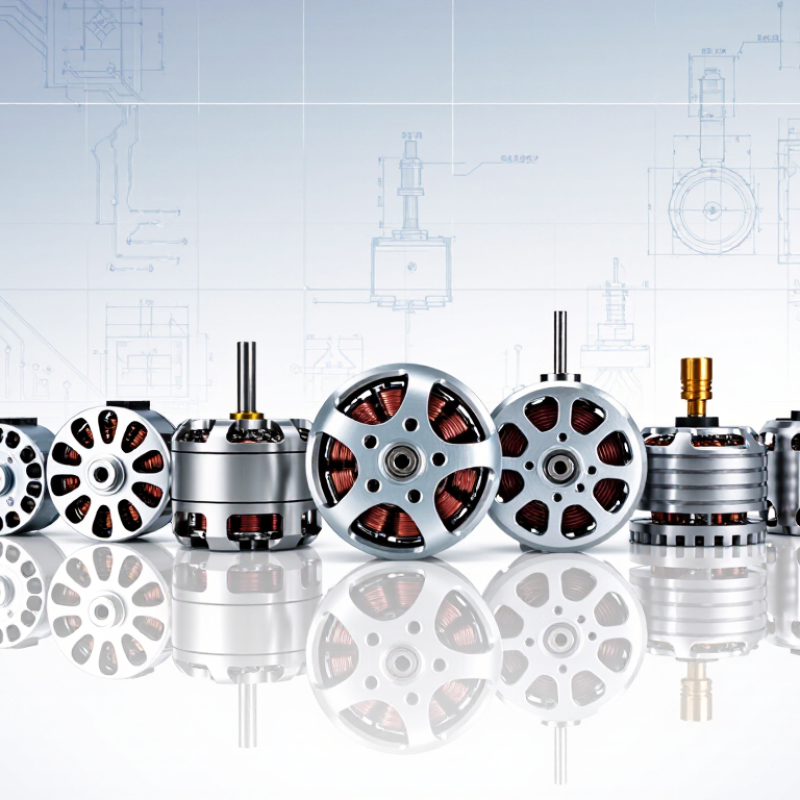
How Outrunner Motors Work and Where They Are Used
An outrunner motor places its stator and copper windings at the center, while a bell-shaped rotor turns around them. Permanent magnets line the inside of that outer bell. As an electronic speed controller energizes the windings in sequence, magnetic forces pull the rotor around. Position may be estimated electronically or measured with sensors. The outer rotor’s wider radius can provide useful torque at relatively low speeds, though winding, current, cooling, and load all matter. The shape alone does not guarantee performance.
You’ll find outrunners in multirotor aircraft, radio-controlled planes, compact fans, and some direct-drive bicycle hub systems. In a small aircraft, the motor may spin a propeller directly, avoiding extra gears and their weight. A drone motor must respond quickly, but its propeller size and airflow affect heat and efficiency. Check those details, not just the advertised power. One easy-to-miss point: a motor that feels strong on a brief test can overheat during a long climb. Selection takes a little calculation, and sometimes a little humility.
Key Specifications for Comparing Outrunner Motors
When comparing outrunner motors, check Kv, rated voltage, continuous current, and motor weight. Kv estimates unloaded revolutions per minute per volt; it does not directly tell you how much useful thrust a setup will produce. A lower-Kv motor may suit a larger propeller, but only when the battery, propeller, and electronic speed controller are compatible. Compare stator dimensions and winding resistance too. These help indicate torque potential and heat losses, though neither replaces test data.
Tips: Check the manufacturer’s efficiency figures at the voltage and load you expect to use. Note the propeller size, current draw, and temperature during tests. A motor that feels cool during a brief run may still overheat under sustained load.
Also compare shaft diameter, mounting-hole pattern, and overall dimensions before buying. A few millimeters can affect frame clearance or require a different mount. Look for test conditions behind power and efficiency claims; figures measured with different propellers are not directly comparable. Numbers can mislead. I would not choose by peak power alone, since it may only be available briefly and can hide practical limits. Real-world performance depends on airflow, installation, and the complete power system, so leave room for some uncertainty.
What Are the Top 10 Outrunner Motors to Buy? — Key Specifications for Comparing Outrunner Motors
Compare common outrunner stator-size classes by typical KV range. These are indicative ranges, not specifications for individual motors; KV varies with winding and manufacturer.
How to use this chart: KV indicates approximate no-load RPM per volt. Lower-KV motors are commonly paired with larger propellers, while higher-KV motors are often used with smaller propellers. Choose based on your battery voltage, propeller, and the motor’s rated current and power—not KV alone.
Ten Outrunner Motors for Different Applications
Outrunner selection follows the task, not a universal ranking.
The FAA’s 2024–2044 Aerospace Forecast projects the U.S. commercial small-drone fleet will grow from about 821,000 aircraft in 2023 to 1.18 million by 2028. That signals wider use, but not one ideal motor. A 1103 suits micro quads; a 1404 can serve compact cinewhoops; a 2207 is common for responsive freestyle builds; and a 2806.5 can provide more torque for longer-range aircraft. Check propeller size, battery voltage, and current limits together.
For fixed-wing models, a 2814 pusher offers a practical middle ground, while a 4006 may suit efficient gliders. Larger mapping aircraft can use low-KV outrunners with broad propellers; heavy-lift multirotors need carefully matched motor sets. Sealed outrunners also suit small RC boats, and compact direct-drive versions can power lightweight robotic joints.
Ten useful choices, ten different compromises.
Motor-size labels alone are not enough. The U.S. Department of Energy’s motor-systems guidance notes that motor-driven systems account for a substantial share of industrial electricity use, making efficiency and heat management important beyond aircraft. Still, its industrial figures do not predict small-motor performance.
A bench test can humble a tidy spreadsheet.
Measure temperature and current under the actual load before committing.
How the Top Models Compare in Performance and Value
A useful top-ten comparison starts with measured output, not the largest number printed on a specification sheet. Compare motors using the same battery voltage, propeller, and cooling conditions. Record thrust, input power, current, motor temperature, and weight. Rated watts are not always sustainable watts. Heat changes everything.
Value depends on usable performance over a whole flight. Divide tested continuous output by motor weight, then check the purchase price and required controller. A motor that produces strong thrust for thirty seconds may disappoint on a longer climb.
DOE’s 2014 report, Improving Motor and Drive System Performance, estimates motor-driven systems use about 70% of industrial electricity. That figure is not an outrunner benchmark, but it reinforces why losses and heat deserve attention.
The IEA’s 2011 analysis estimates motor-driven systems consume roughly 45% of global electricity. Again, it covers far more than hobby motors. For a fair shortlist, treat independent bench data as more useful than broad efficiency claims. Check whether the test reports include propeller, voltage, current, and temperature; missing details make comparisons shaky.
A practical rule: Cheap can sting. I would favor a slightly heavier unit if it stays cooler at the same thrust, though cooling setups can distort that judgment. Compare the ten candidates under identical conditions, and calculate price per sustained watt rather than price alone.
How to Choose the Right Outrunner Motor for Your Build
Choosing an outrunner starts with the load, not a “top ten” list.
Estimate the propeller or wheel’s required thrust, torque, and speed, then match the motor’s voltage and Kv rating. Kv describes approximate unloaded RPM per volt; it does not tell you how much torque the motor can deliver. Check the manufacturer’s test data for current, power, and temperature limits under a comparable load. IEA’s 2011 report, Energy-Efficiency Policy Opportunities for Electric Motor-Driven Systems, estimates that motor-driven systems use about 45% of global electricity. That broad figure is not an outrunner test, but it shows why efficiency deserves attention.
Heat is unforgiving.
Next, pair the motor with a battery and speed controller that can handle expected current, including brief peaks. Compare the motor’s shaft and mounting dimensions with your frame, and leave room for airflow around the windings. A larger propeller can increase load sharply, so use a thrust stand or reliable test data rather than guessing from unloaded RPM. I would also leave thermal headroom; a motor that barely meets a rating on paper may overheat in a confined build.
One detail is easy to miss: published limits depend on cooling and test conditions. Check those assumptions before buying.
Conclusion
An Outrunner Motor places its rotating outer shell around the stationary inner components, creating a design often valued for strong torque and compact integration. Outrunner motors are used in a range of builds, but choosing one requires more than comparing headline power. Important specifications include size, weight, voltage, speed, torque, current limits, and compatibility with the rest of the system. Understanding how these factors work together helps narrow the options to motors suited to different applications.
The top ten choices can be compared by performance, efficiency, durability, and overall value rather than by a single specification. The right motor depends on the build’s intended use, available space, power source, load, and operating conditions. By matching these needs with the motor’s specifications and considering the complete system, builders can make a practical choice that balances capability, reliability, and cost.

 Liangzhi Electrical