Top High Volume Low Speed Fan Manufacturers?

Time:2026-10-13 Author:Sienna
0%

The global demand for high volume low speed fan systems is rising across warehouses, factories, sports halls, and agricultural buildings. Grand View Research’s 2024 market assessment identifies energy efficiency and large-space cooling as major growth drivers. The report also highlights industrial facilities as a leading application segment. That matters where a single fan can move air across a floor larger than a supermarket.

The U.S. Department of Energy reports that fan systems can represent a significant share of industrial electricity consumption, especially when airflow is poorly controlled. Its industrial efficiency guidance recommends matching fan operation with actual load conditions. The message is practical. Bigger is not always better. A 24-foot fan spinning too quickly may waste energy, create uncomfortable drafts, or disturb stored materials.

Thermal-comfort expert Dr. Richard de Dear has described air movement as “a powerful tool for improving thermal comfort.” His point supports the central purpose of a high volume low speed fan: moving substantial air at low rotational speed, rather than simply producing noise and turbulence. Still, manufacturer claims deserve careful testing. Published airflow ratings may use different measurement methods, room sizes, and operating conditions. This article outline therefore examines leading high volume low speed fan manufacturers through product engineering, efficiency data, warranty terms, controls, installation experience, and after-sales support. Some comparisons may remain imperfect. Real buildings are rarely perfect laboratories. Temperature, humidity, ceiling height, and worker comfort can change the result within one afternoon.
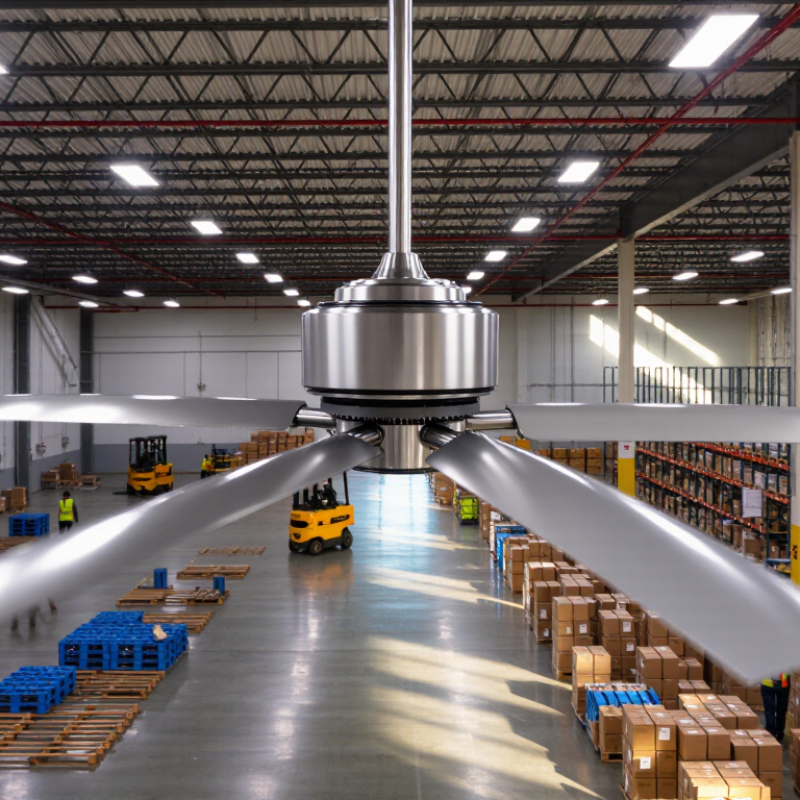
Top High Volume Low Speed Fan Manufacturers?

What Defines a High-Volume, Low-Speed Fan Manufacturer

What Defines a High-Volume, Low-Speed Fan Manufacturer

A high-volume, low-speed fan manufacturer is defined by measured performance, not a large blade diameter alone. The U.S. Department of Energy’s Energy Saver guidance reports that ceiling fans can support thermostat settings about 4°F higher during cooling. This benefit depends on airflow reaching occupied zones, not simply moving air near the roof. Reliable manufacturers therefore publish airflow, power input, noise, and coverage data under stated test conditions. AMCA Publication 211 provides a recognized framework for evaluating fan air performance. ISO 5801 also supports standardized fan testing.

Engineering quality appears in small details.

A strong manufacturer balances blades, protects the motor, and controls speed smoothly. It should explain how airflow changes across a warehouse floor, retail space, or livestock building. ASHRAE Standard 55 recognizes air movement as a factor in thermal comfort, but comfort still depends on humidity, clothing, activity, and temperature. One setting cannot fit every building.

Look for transparent data.

The less visible work matters too. Manufacturers should document installation limits, maintenance intervals, emergency controls, and electrical efficiency. A practical weakness remains: published airflow numbers may not reflect real obstructions, low ceilings, or poor placement. Independent testing helps, but field verification is still valuable. The best suppliers invite performance review after installation, rather than treating a catalogue figure as proof.

Key Criteria for Comparing HVLS Fan Manufacturers

Top High Volume Low Speed Fan Manufacturers?

Comparing HVLS fan manufacturers requires more than checking airflow ratings. Look for test data showing air volume, coverage, noise, and power consumption under clear conditions. A reliable manufacturer should explain how blade diameter, motor type, and ceiling height affect performance. Ask for project references in buildings similar to yours, such as warehouses, gyms, or livestock facilities. Real installation experience often reveals details that brochures omit.

Safety and service also deserve close attention. Review guarding, emergency controls, structural mounting requirements, and electrical documentation. Check whether technicians provide site assessments and commissioning support. A strong warranty matters, but response time matters more when a fan stops above a busy production line. Manufacturers should offer replacement parts for several years. Their technical answers should be specific, not vague.

Tips: Request a written comparison using the same room size, mounting height, and operating speed. Measure noise near occupied areas. Ask for maintenance intervals and expected motor life. Do not judge efficiency from one impressive number. Energy results can change with airflow settings and building layout.

No comparison is perfect. I have seen low-cost proposals become expensive after installation because support, controls, or lifting equipment was excluded. A careful buyer should inspect every assumption before signing. The best choice is usually the manufacturer with transparent testing, practical engineering advice, and dependable after-sales support.

Leading HVLS Fan Manufacturers by Product Capabilities

Top High Volume Low Speed Fan Manufacturers?

Leading HVLS Fan Manufacturers by Product Capabilities

The strongest HVLS fan manufacturers are distinguished by engineering depth, not advertising volume. They offer several blade diameters for warehouses, gyms, workshops, and agricultural buildings. Product capabilities should include direct-drive and geared motor options, adjustable speed control, and airflow designed for large open spaces. A reliable manufacturer explains coverage areas with measured data, not vague claims. Testing records matter.

Control systems also reveal manufacturing quality. Advanced suppliers may provide wall panels, remote controls, building-management integration, and fault alerts. Good systems support smooth acceleration, emergency stopping, and stable operation near shelving or overhead equipment. Materials deserve equal attention. Aluminum blades, corrosion-resistant coatings, sealed bearings, and balanced assemblies can reduce vibration. However, no fan is perfect. Noise ratings may change after installation, especially in buildings with hard concrete surfaces.

Tips: Ask for airflow charts, motor efficiency figures, warranty terms, and installation requirements. Check whether spare parts remain available locally. Request a sample maintenance schedule. Also, compare safety features, not only air volume. A manufacturer with engineering support can help calculate spacing, mounting height, and electrical load. Site conditions often expose weaknesses that brochures hide. That part is easy to underestimate.

Top High Volume Low Speed Fan Manufacturers? - Leading HVLS Fan Manufacturers by Product Capabilities

Capability Class Typical Fan Diameter Typical Airflow Coverage Motor Technology Control Capability Best-Fit Applications Key Product Strength
Large-warehouse HVLS specialists 5.5–7.3 m (18–24 ft) Large open areas, commonly up to several thousand square metres per fan depending on ceiling height, layout and airflow target Permanent-magnet synchronous motor or high-efficiency geared motor Variable-speed control, start/stop scheduling and multi-fan control Distribution centres, aircraft hangars, manufacturing halls and agricultural buildings High air movement with relatively low operating speed and reduced electrical demand
Energy-efficiency focused suppliers 4.3–7.3 m (14–24 ft) Designed for destratification and comfort airflow across broad floor areas Direct-drive permanent-magnet motor systems are commonly offered for efficient part-load operation Fine speed adjustment, low-speed operation, fault monitoring and energy-use management Buildings seeking lower heating and cooling costs Efficient air circulation without relying solely on high-speed spot cooling
Compact commercial HVLS suppliers 2.4–4.3 m (8–14 ft) Small and medium commercial spaces with moderate ceiling heights Direct-drive motor or compact geared motor Wall-mounted controller, remote control and basic scheduling options Retail stores, gyms, workshops, restaurants and small warehouses Lower installation complexity and suitability for constrained spaces
Industrial-duty fan suppliers 3.7–7.3 m (12–24 ft) Large industrial zones where mechanical robustness and continuous operation are priorities Heavy-duty direct-drive or geared motor assemblies Industrial variable-frequency drive compatibility, emergency stop and centralized control options Factories, logistics facilities, steel buildings and high-dust environments Durable construction, serviceability and suitability for demanding duty cycles
Agricultural-building specialists 3.7–7.3 m (12–24 ft) Wide-span barns and agricultural buildings, subject to livestock, ceiling and ventilation requirements Corrosion-resistant motor and structural components Variable-speed operation, timer control and integration with environmental systems where supported Dairy barns, equestrian facilities, poultry buildings and farm workshops Air mixing and heat-stress reduction when correctly selected and installed
Smart-building integration suppliers 2.4–7.3 m (8–24 ft) Scalable coverage for single-zone and multi-zone commercial facilities Electronic commutation or permanent-magnet motor technology Building-management-system connectivity, sensor feedback, group control and automated schedules Modern offices, airports, retail complexes and connected industrial facilities Centralized monitoring and automated operation based on temperature or occupancy data
Outdoor and semi-outdoor specialists 2.4–5.5 m (8–18 ft) Covered loading areas, open-sided structures and sheltered outdoor workspaces Weather-protected motor and corrosion-resistant hardware Variable-speed control with protection suited to the specified installation environment Covered patios, transport depots, loading docks and open-sided warehouses Adaptation to humidity, dust and changing airflow conditions

Product ranges, coverage areas and control functions vary by model. Final selection should be based on ceiling height, building layout, required air movement, electrical supply, mounting structure and applicable local safety requirements.

Manufacturing Standards, Technology, and Customization Options

High-volume low-speed fan manufacturers should be judged by measured performance, not catalog diameter. AMCA 230-23 defines procedures for testing air-circulating fan thrust and power. Buyers should request test conditions, airflow curves, input power, and sound data. A large blade does not guarantee efficient air distribution.

Motor selection also matters. IEC 60034-30-1 supports consistent efficiency classifications for electric motors. Variable-speed drives, thermal protection, and low-speed stability should be verified under real operating loads. The U.S. Department of Energy’s 2018 Commercial Buildings Energy Consumption Survey, published in 2022, reports that space heating represents about 32% of commercial site energy use. Better air mixing may reduce stratification and support heating efficiency. Results still depend on insulation, ceiling height, and climate.

Customization separates practical manufacturers from volume sellers. Useful options include blade pitch, diameter, mounting extensions, corrosion-resistant finishes, emergency controls, occupancy sensors, and building-management integration. Request BIM files and installation drawings early. A commissioning engineer should check airflow at floor level, not only motor speed. I would also question impressive savings claims without independent testing. A polished brochure is not evidence. Warranty response, spare-part availability, and service training deserve equal attention. Some projects still overlook these details. That mistake becomes expensive after installation.

Typical HVLS Fan Size Classes and Airflow Capacity

High-volume low-speed fan manufacturers commonly configure systems by fan diameter, airflow capacity, motor efficiency, and installation requirements. The chart shows representative maximum airflow levels for widely used HVLS size classes.

Manufacturing and customization considerations: Performance testing may reference AMCA 230 airflow measurement practices, while motor and electrical design can follow IEC 60034-1 requirements. Typical customization options include blade count and profile, corrosion-resistant finishes, variable-frequency drive control, IP-rated enclosures, voltage and frequency selection, mounting structures, and integration with building-management systems. Actual airflow depends on blade design, motor speed, installation height, and site conditions.
Airflow values are rounded representative reference points for common HVLS product classes and are shown in cubic metres per hour (m³/h).

How to Select the Right HVLS Fan Manufacturer for Your Facility

Top High Volume Low Speed Fan Manufacturers?

Selecting the right HVLS fan manufacturer starts with verified performance, not a polished catalog. Ask for airflow curves, sound measurements, motor efficiency data, and test conditions. ANSI/AMCA Standard 230 provides a recognized laboratory method for rating air-circulating fans. A credible manufacturer should explain how its results were produced. Vague “covers 20,000 square feet” claims deserve scrutiny.

Match the fan to your facility’s height, layout, climate, and work activity. The U.S. Department of Energy states that air movement can allow a thermostat setting to rise by approximately 4°F while maintaining similar comfort. That benefit depends on correct placement, operating schedules, and humidity control. A warehouse with tall racks needs a different airflow pattern than a gym or production floor. Request a site survey, not only a size chart.

Look beyond the motor warranty. Review controls, emergency procedures, maintenance access, spare-part availability, and installer training. The ASHRAE Handbook emphasizes that thermal comfort depends on air speed, temperature, humidity, clothing, and activity level. One fan may improve comfort near a loading door but leave quiet corners stagnant. I have seen attractive layouts fail because shelving was ignored. A simulation helps, but measurements after installation matter more. Select a manufacturer willing to document airflow, revise the plan, and discuss limitations plainly.

FAQS

What defines a reliable high-volume, low-speed fan manufacturer?

Reliable manufacturers provide measured airflow, power use, noise, and coverage data. A large blade alone proves little. They also explain test conditions and installation limits.

Which performance details should buyers request?

Request airflow curves, sound readings, motor efficiency, and input power. Ask how testing was performed. Vague coverage claims need careful review.

Why does building layout matter when selecting a fan?

Airflow must reach occupied areas, not remain near the ceiling. Tall racks, low ceilings, and loading doors change circulation. Placement is easy to underestimate.

Can these fans improve comfort and heating efficiency?

Air movement may support a slightly higher cooling thermostat setting. It can also reduce warm air trapped near ceilings. Results depend on insulation, humidity, climate, and activity.

What customization options are useful?

Useful options include blade pitch, diameter, mounting extensions, and corrosion-resistant finishes. Emergency controls and occupancy sensors may improve operation. Building-control integration can simplify scheduling.

How should a manufacturer verify performance after installation?

A commissioning engineer should measure airflow at floor level. Motor speed is not enough. Shelving can quietly disrupt the intended pattern.

What service details deserve attention beyond the motor warranty?

Review maintenance intervals, spare-part access, emergency procedures, and installer training. Ask how quickly technical support responds. A warranty may look strong on paper.

What warning signs suggest a poor manufacturer choice?

Be cautious with polished brochures, unclear testing, and fixed size charts. I would question dramatic savings without independent evidence. The plan may still fail.

Conclusion

Choosing the right high volume low speed fan manufacturer requires more than comparing airflow ratings or product prices. A reliable manufacturer should demonstrate strong engineering expertise, consistent production quality, durable materials, and a clear understanding of commercial, industrial, agricultural, and public-space applications. Important evaluation criteria include energy efficiency, coverage area, motor performance, noise control, safety features, warranty support, installation services, and the ability to provide practical maintenance solutions.

Leading manufacturers distinguish themselves through advanced aerodynamic design, modern manufacturing standards, rigorous quality testing, and flexible customization options such as blade size, control systems, mounting methods, and finish choices. To select the best partner for your facility, assess the building’s ceiling height, layout, climate, occupancy, operational needs, and long-term energy goals. A manufacturer that offers accurate site evaluation, transparent technical specifications, responsive support, and scalable product solutions can help ensure reliable circulation, improved comfort, and efficient facility performance.


Sienna

Sienna

Sienna is a skilled marketing professional with a deep expertise in our company’s core products and services. With a passion for innovation and detail, she plays a pivotal role in crafting insightful blog posts that not only highlight the unique features of our offerings but also provide valuable......