Choosing the right warehouse fans can significantly impact productivity and employee comfort. Industry reports suggest that proper ventilation and cooling can improve labor efficiency by up to 30%. Many businesses overlook the importance of airflow in warehouse environments. This oversight can lead to increased operational costs and decreased employee morale.
Warehouse fans come in various types and sizes. Understanding your specific needs is essential. Factors such as the size of the warehouse and the type of materials stored will influence your choice. A poor selection can result in ineffective cooling and wasted resources. Studies indicate that poorly ventilated spaces can cause a 20% drop in worker performance.
Investing in high-quality warehouse fans can mitigate these issues. They enhance air circulation, making the environment more pleasant. However, the initial cost may be daunting. Reflecting on your choices in fan technology and placement will yield long-lasting benefits. Ultimately, the right decision can lead to substantial improvements in both employee satisfaction and operational efficiency.
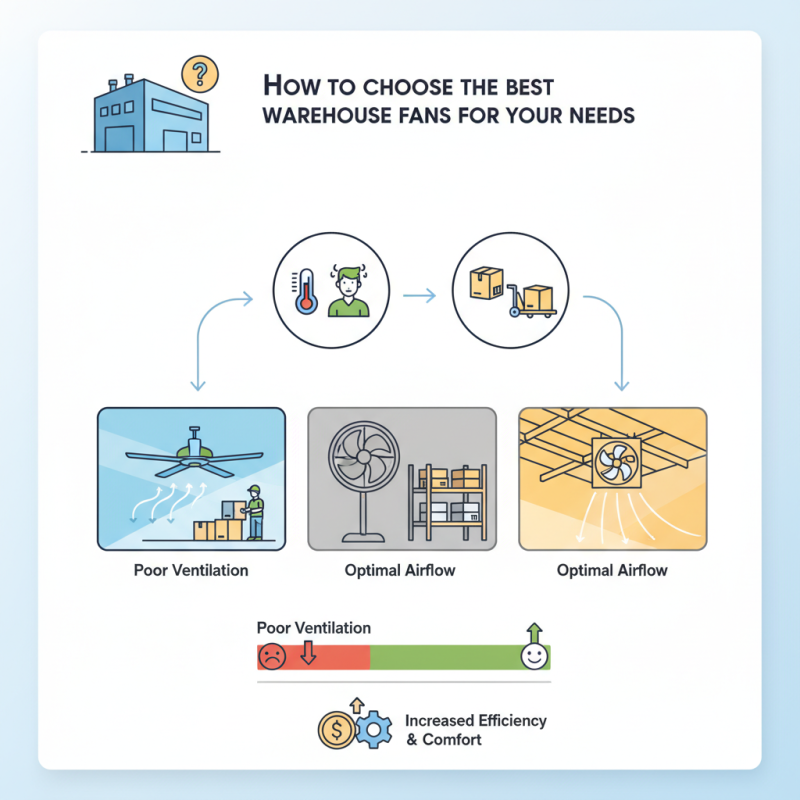
Warehouse fans come in various types, each serving specific functions. Understanding these options is crucial for making an informed decision. High-velocity fans are often used for large spaces. They circulate air effectively, keeping temperatures down. However, they can be quite noisy, which might pose challenges in work environments.
Then, there are exhaust fans designed to draw out hot, stale air. These fans help in maintaining ideal indoor air quality. They are particularly useful in manufacturing settings where fumes and dust accumulate. Yet, not all exhaust fans are created equal. Some may not have the power needed for larger areas, lacking effectiveness.
In addition to these, portable fans offer flexibility. They can be moved easily and provide localized cooling. However, they might not suit every warehouse layout, as their reach is limited. Evaluating your warehouse's specific needs will help determine the right fan type. Knowing the space dimensions and airflow requirements is essential. This way, you can avoid investing in a fan that underperforms or becomes outdated quickly.
When evaluating airflow requirements in a warehouse, consider both size and layout. A larger warehouse demands more airflow to maintain a comfortable environment. Measure total square footage first. For instance, if your warehouse spans 10,000 square feet, you'll need a fan system capable of delivering sufficient airflow throughout. Don't forget to factor in the layout. Open spaces may allow for efficient airflow, while narrow aisles can hinder it.
Tips: Assess the height of your ceilings. Tall spaces require different fan placements. If your ceilings are 20 feet high, consider mounting fans higher for better circulation. Beware of obstructions like shelves or equipment that impact airflow.
Identify activity zones in your warehouse. High-traffic areas, such as loading docks, may need stronger air movement. Deploying fans strategically can address cooling demands without wasting energy. Review air patterns regularly. Changes in layout should prompt reevaluation of fan placement. Adjustments can optimize performance over time.
When choosing warehouse fans, energy efficiency is crucial. Efficient fans can significantly reduce operating costs. Look for models with Energy Star ratings or those that have variable speed settings. Such features allow you to adjust airflow based on your needs. This flexibility can lead to lower energy consumption during off-peak hours.
Operating costs include both energy and maintenance expenses. Regular upkeep is essential for fan longevity. Neglecting cleaning and maintenance can lead to higher energy use. Dust buildup can hinder performance and, ultimately, waste energy. Therefore, a fan that is easy to clean can be less costly in the long run.
Don't overlook noise levels. Some high-efficiency fans can be quite loud, affecting work conditions. Ensure the fan meets your noise-level tolerance. This factor can also impact productivity. Testing the fan in a real-life scenario may yield insights into its efficiency and suitability for your warehouse.
When choosing the best warehouse fans, noise levels and maintenance needs should be at the forefront of your mind. In busy environments, excessive noise can be a distraction. It can affect worker productivity and even lead to complaints. Opt for fans designed for quieter operations, especially in areas with high foot traffic. You’ll find that models with noise ratings below 60 dB are preferable.
Routine maintenance is crucial for fan longevity. Dust and debris can accumulate quickly in warehouse settings. Fans should be checked periodically to ensure they are functioning efficiently. A dirty fan can lead to higher energy costs and potential system failures. Regular cleaning is essential. Don’t overlook this step.
Tip: Create a maintenance schedule. This helps ensure that noise levels stay down and fans operate efficiently.
Consider the fan's location as well. Place it strategically to maximize airflow while minimizing noise exposure for workers. The right fan can make a significant difference in comfort without overwhelming sound levels. Remember, a poorly chosen fan could lead to higher costs and employee dissatisfaction.
Tip: Involve your team in fan selection. They can provide insights on noise tolerance and airflow preferences.
When selecting warehouse fans, exploring the prominent brands and models is essential. Research indicates leading models often feature high airflow ratings, ranging from 6000 to 30,000 CFM (cubic feet per minute). These ratings are crucial for effective cooling and air circulation. Data from the National Association of Wholesaler-Distributors highlights that the right airflow can improve worker productivity by up to 25%.
Consider fan design as well. High-velocity fans are popular for their ability to create focused airflow. However, the spread of air also matters. Larger fans offer a broader distribution, reducing hot spots in the warehouse. Look for models that provide adjustable speed settings. Flexibility can be key in adapting to seasonal temperature swings.
Tip: Assess your warehouse size before purchasing. Calculate the required airflow based on volume and layout. A common mistake is choosing a fan that is too small, leading to ineffective cooling. Remember, a fan's noise level can impact the workplace. Ensure the models you consider maintain a bearable sound output.
Lastly, monitor energy efficiency ratings. High-efficiency models can significantly lower electricity costs over time. Some warehouse operators overlook this factor, only to face increased utility bills later. Keeping energy consumption in check is a practical concern alongside cooling effectiveness.
| Fan Model | Air Flow (CFM) | Blade Size (inches) | Noise Level (dB) | Energy Efficiency (W/CFT) |
|---|---|---|---|---|
| Model A | 6000 | 24 | 55 | 0.5 |
| Model B | 7500 | 30 | 60 | 0.4 |
| Model C | 8000 | 36 | 65 | 0.6 |
| Model D | 9000 | 42 | 70 | 0.45 |
| Model E | 8500 | 48 | 50 | 0.55 |
: Measure the total square footage first. Larger spaces need more airflow.
Open spaces allow better airflow. Narrow aisles can obstruct it.
Higher ceilings may require different fan placements for effective circulation.
High-traffic areas need stronger air movement. Loading docks require focused airflow.
High noise can distract workers and reduce productivity. Quieter fans are advisable.
Regular checks are essential. Dust can lead to inefficiency and higher costs.
Ignoring maintenance can lead to system failures and employee dissatisfaction.
Review air patterns regularly. Adjust fan placement as needed for optimal performance.
Yes, gathering their opinions on noise tolerance and airflow can guide better choices.
It might result in increased costs and lower worker satisfaction.
When selecting the best warehouse fans for your needs, it's crucial to understand the various types of fans available and their specific functions. Factors such as airflow requirements must be carefully evaluated according to the size and layout of your warehouse to ensure optimal air circulation. Additionally, assess the energy efficiency and operating costs associated with different fan models, as this can significantly impact your long-term expenses.
Another important consideration is the noise level of the fans, particularly in environments where employees work. Maintenance needs should also be factored in, ensuring the chosen fans can be easily serviced. By reviewing all these criteria, you'll be better equipped to identify the most suitable warehouse fans that meet your operational requirements while enhancing comfort and efficiency in your facility.

Liangzhi Electrical