In today's industrial landscape, efficient cooling solutions are vital for maintaining optimal operating conditions. The importance of industrial large fans cannot be overstated. According to John Smith, a leading expert in industrial ventilation, "Choosing the right industrial large fan can drastically improve energy efficiency and worker comfort." Such fans are designed to move large volumes of air, effectively reducing temperatures in manufacturing and warehouse settings.
The selection of an industrial large fan involves careful consideration of size, speed, and airflow dynamics. Factors like the layout of the facility and specific cooling needs play a crucial role. These fans must provide reliable performance while remaining energy-efficient. However, many companies struggle with finding the right model for their unique environments. It's not just about cooling; it's about ensuring productivity remains high.
Moreover, a poorly chosen fan can lead to wasted resources. Companies may face challenges in maintenance and operation costs if they overlook these aspects. The quest for the perfect industrial large fan may require trial and error. Ultimately, understanding the intricate balance between airflow and energy use can yield significant benefits for industries reliant on large-scale cooling solutions.
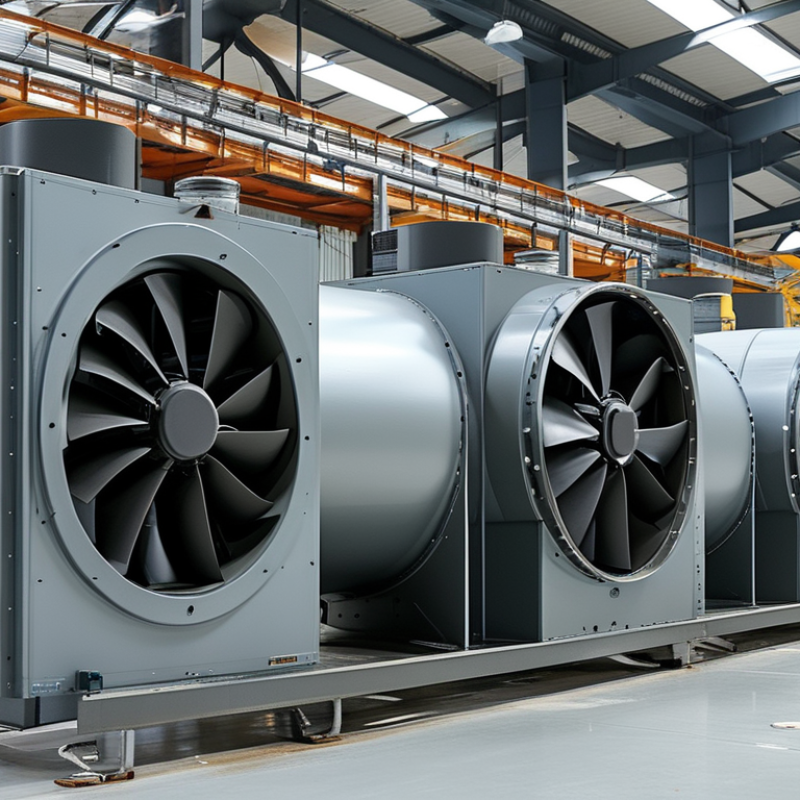
When it comes to industrial settings, large fans play a crucial role in maintaining efficient cooling. Different types of fans are suitable for various applications. For instance, axial fans are commonly used in warehouses. They provide a direct air flow, making them ideal for large, open spaces. In contrast, centrifugal fans are more effective in directing air into tight areas. These are perfect for factories with machinery that generates heat.
Portable fans are also a great option for temporary cooling solutions. These can be easily moved to different areas as needed. They are particularly useful in construction sites where air movement is often limited. Many facilities require a combination of different fan types. This approach ensures consistent and effective cooling throughout the entire space.
Tip: Always assess the specific cooling needs of your space before choosing a fan type.
Installation is another important factor. Properly positioning the fans can enhance their efficiency. Fans should be placed to avoid dead spots where air cannot circulate effectively. Additionally, consider the noise levels if the fan operates in a quiet work environment.
Tip: Regular maintenance is crucial. Clean fans regularly to maintain airflow and prevent overheating.
When selecting large industrial fans, several key features should be evaluated to ensure efficient cooling solutions. One important aspect is the fan's airflow capacity. Fans with higher airflow rates can cover larger areas, making them ideal for vast industrial spaces. Measuring the cubic feet per minute (CFM) provides insight into their efficiency.
Another factor is the fan's noise level. Industrial environments can be loud, but excessive noise can disrupt productivity. Look for fans designed with noise-reduction technology. This feature is especially crucial in areas requiring focus and communication. Additionally, energy efficiency is essential. Fans consuming less power while delivering optimal performance can lead to significant cost savings over time.
Durability is also a vital consideration. Industrial fans must withstand harsh conditions. Materials and construction techniques determine their lifespan. Corrosion-resistant finishes can enhance longevity. Finally, installation and maintenance ease should not be overlooked. Fans that are complex to install can incur extra costs and downtime. Regular maintenance is necessary for operational efficiency, so consider designs that simplify these tasks.
In industrial settings, efficient cooling is critical. Large fans play a vital role in maintaining optimal temperatures. Energy efficiency is a key factor to consider. Fans that consume less power can significantly reduce operational costs. Choosing the right fan system can lead to noticeable savings over time.
When evaluating large industrial fans, it’s essential to assess their energy consumption. Many designs focus on maximizing airflow while minimizing energy use. Some fans may claim high efficiency but could fall short in real-world applications. Analyzing real data and user experiences can provide valuable insights. Moreover, the installation and maintenance costs must also align with the anticipated energy savings.
Cost-effectiveness doesn't solely depend on the purchase price. It includes ongoing energy costs and potential repairs. Fans that require frequent maintenance can erode savings, making reliability a priority. As industries shift towards sustainability, selecting fans that balance performance with environmental impact will be increasingly important. Efficient cooling solutions not only enhance productivity but promote a greener future.
| Model | Airflow (CFM) | Power Consumption (W) | Efficiency (CFM/W) | Noise Level (dB) | Cost ($) |
|---|---|---|---|---|---|
| Model A | 12,000 | 150 | 80 | 65 | 1,200 |
| Model B | 15,000 | 200 | 75 | 70 | 1,500 |
| Model C | 10,000 | 120 | 83.33 | 60 | 1,000 |
| Model D | 18,000 | 250 | 72 | 75 | 1,800 |
| Model E | 20,000 | 300 | 66.67 | 68 | 2,000 |
When selecting industrial large fans, brand reputation is crucial. Leading manufacturers often focus on advanced technology and durability. They prioritize energy efficiency, ensuring lower operational costs. Such fans are commonly available in various sizes and airflow capacities. This allows businesses to choose solutions that perfectly match their specific cooling needs.
Some models feature adjustable speeds, which enhance versatility. A fan with a wide airflow range can adapt to different environments and situations. Certain fans are designed for harsh industrial conditions, built with robust materials. This longevity can reduce replacement costs over time. However, not every brand excels equally in all aspects.
It's essential to assess cooling performance alongside noise levels. Some high-powered fans can be disruptive in quieter settings. Industry professionals recommend balancing performance with operational comfort. Regular maintenance is also necessary to ensure optimum efficiency. Many users overlook this, leading to decreased performance over time. Therefore, a thoughtful selection process is important for maximizing value and effectiveness.
Maintaining large industrial fans is crucial for their optimal performance. Regular checks help identify wear and tear. Inspect blades for dirt and debris. Clean them often to ensure efficient airflow. A well-maintained fan operates more smoothly and cools effectively.
Lubrication is another important aspect. Most large fans need lubrication in their bearings to function correctly. Use the recommended lubricant to avoid any potential damage. Don't overlook noise levels. Unusual sounds may indicate underlying issues that need attention.
Also, monitor the fan's speed settings. Sometimes, a fan may not run at peak efficiency if it is not set properly. Check the control systems regularly. Adjustments can significantly improve performance. Remember, consistent maintenance can prolong the life of your fans and enhance cooling efficiency.
: Look for fans with high airflow capacity. Higher cubic feet per minute (CFM) ratings cover larger areas effectively.
Excessive noise can disrupt productivity. Choose fans with noise-reduction technology for quieter operation in focused environments.
Energy-efficient fans consume less power, leading to cost savings over time. They deliver optimal performance while reducing utility bills.
Select fans with corrosion-resistant finishes. Robust construction materials enhance the fan's lifespan in harsh industrial conditions.
Complex installations can incur extra costs and downtime. Easy-to-install fans minimize disruptions to your operations.
Regular maintenance is essential for operational efficiency. Neglecting this can lead to decreased performance and increased repair costs.
No, some brands excel in technology and durability, while others may not. Researching brand reputation can guide your decision.
Not all fans are versatile. Look for models with adjustable speeds to cater to varying cooling needs across different settings.
High-powered fans may be noisy in quiet areas. It's important to assess both cooling performance and noise levels for comfort.
A thoughtful selection process is necessary. Assess cooling needs, durability, and maintenance to maximize effectiveness and value.
When considering an industrial large fan for cooling solutions, it's essential to understand the various types available for different applications, such as axial and centrifugal fans, each designed to optimize airflow in specific environments. Key features to keep in mind include size, airflow capacity, and noise levels, all of which can significantly impact performance.
Additionally, energy efficiency plays a crucial role in selecting an industrial large fan, as it directly relates to operational costs and environmental impact. The market offers a range of brands and models, each with unique specifications to cater to diverse industrial needs. Regular maintenance is also vital for maintaining optimal performance, ensuring that fans operate efficiently and last longer.

Liangzhi Electrical