2026 Top Low Speed Drive Motor Types for Global Buyers?

Time:2026-09-23 Author:Amelia
0%

The 2026 global buying landscape is shifting from simple motor selection toward complete, measurable drive systems. A Low-speed Drive Motor must deliver stable torque, controlled heat, and dependable operation under frequent starts, dust, moisture, or heavy loads. In a conveyor plant, for example, a motor may run slowly while carrying several tonnes of material. That duty is very different from a quiet actuator in a packaging line.

The International Energy Agency reports that electric motor systems consume roughly half of global electricity, making efficiency a major industrial priority. The IEA’s Energy Efficiency 2023 analysis also stresses the value of efficient equipment, controls, and system-level optimization. These findings support closer evaluation of geared motors, direct-drive torque motors, permanent-magnet motors, servo motors, and variable-frequency drive combinations. Motor efficiency alone is not enough. Gear losses, cooling, braking, and control quality can change the real energy result.

IEC 60034-30-1 provides a recognized framework for motor efficiency classes, including IE3 and IE4 categories. The U.S. Department of Energy and the European Commission also highlight minimum efficiency requirements and lifecycle energy savings across industrial equipment. Yet, published market forecasts should be read carefully. Definitions often differ between “low-speed motor,” “gearmotor,” and “drive system.” This guide compares the leading motor types for global buyers using torque range, speed control, duty cycle, maintenance needs, environmental protection, and total cost of ownership. Some applications still reward a robust gearbox. Others justify a direct-drive design. The right answer is rarely the newest motor.
2026 Top Low Speed Drive Motor Types for Global Buyers?

What Is a Low-Speed Drive Motor and How Does It Work?

2026 Top Low Speed Drive Motor Types for Global Buyers

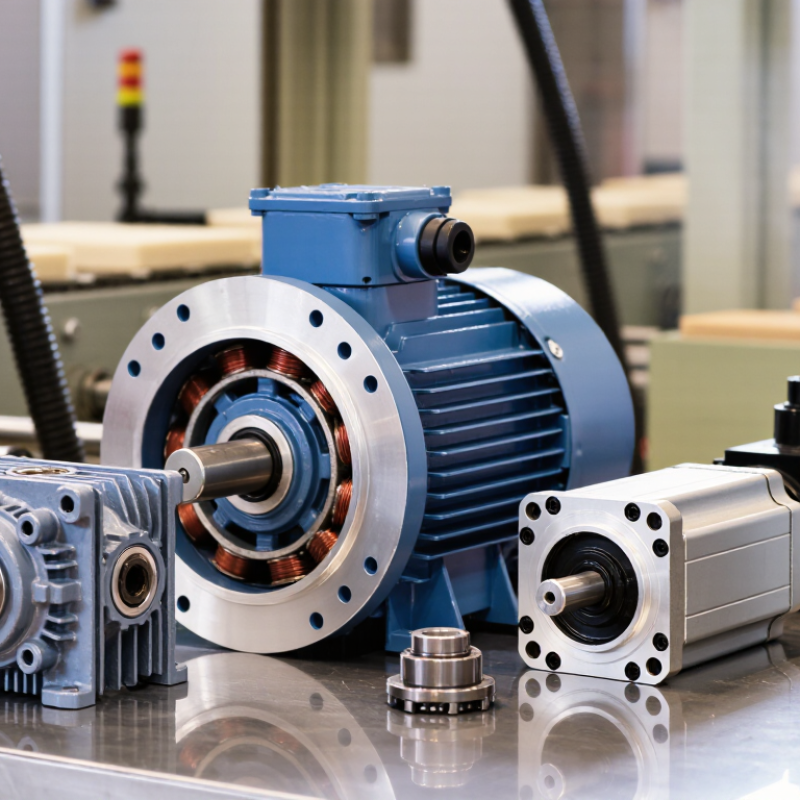
A low-speed drive motor is built to deliver useful torque while turning slowly. Unlike a high-speed motor, it can operate near the machine’s working speed. This reduces mechanical stress and may simplify transmission design. Many systems use an induction motor with a gearbox. The gearbox lowers output speed and increases shaft torque. A direct-drive motor removes that gearbox, using a larger electromagnetic structure to produce torque at low revolutions per minute.

Inside the motor, electromagnetic fields create rotation between the stator and rotor. An inverter can adjust frequency and voltage, allowing smoother speed control. Induction motors are proven, economical, and suitable for pumps, conveyors, and mixers. Permanent-magnet motors often provide higher efficiency and stronger torque in compact equipment. Geared motors remain practical where starting loads are high. The choice depends on duty cycle, load inertia, cooling, and required speed accuracy.

The term “low-speed motor” is not perfectly standardized. Buyers should verify rated speed, continuous torque, peak torque, insulation class, and allowable overload time. Check voltage, frequency, enclosure protection, and local certification requirements before ordering. Ask for performance curves at the actual operating speed, not only at rated speed. Installation experience matters. A motor that looks efficient on paper may overheat in a dusty workshop or lose control during frequent starts. Real machinery is less tidy. That detail deserves attention.

Key Types of Low-Speed Drive Motors in 2026

2026 Top Low Speed Drive Motor Types for Global Buyers

Key Types of Low-Speed Drive Motors in 2026

Geared motors remain practical for conveyors, mixers, and lifting equipment. Their gearbox increases torque while reducing output speed. Helical gears offer efficiency and smooth operation. Worm gears provide compact construction and strong holding ability. However, worm designs can lose more energy through heat. Buyers should check duty cycles, lubrication needs, and gearbox service access before ordering.
Direct-drive permanent magnet motors remove the gearbox entirely. They deliver high torque at low speed, with fewer mechanical wear points. This design suits winders, indexing tables, and large fans. Permanent magnet synchronous motors also provide precise speed control when paired with suitable drives. Initial costs may be higher, but maintenance can be simpler. Cooling still matters, especially inside warm factories.
Brushless DC motors work well in compact machinery and automated equipment. They offer efficient electronic commutation and responsive control. AC induction motors with variable-frequency drives remain reliable for pumps and general industrial loads. They tolerate harsh environments and are widely supported by technicians. Servo motors serve applications needing accurate positioning, such as robotic joints and packaging lines. Yet, the “best” motor depends on load inertia, starting torque, speed range, voltage, and local service skills. Neat comparisons can mislead. A technically excellent motor may perform poorly after an incorrect drive setting or undersized cable. Procurement teams should test the complete motor-drive system under real load conditions.

How to Compare Torque, Speed, Efficiency, and Control

2026 Top Low Speed Drive Motor Types for Global Buyers

Choosing a low-speed drive motor requires more than checking the rated power. Geared motors provide strong torque in compact machines, but their gears add noise, maintenance, and transmission losses. Direct-drive motors reduce mechanical parts and deliver smooth torque, although they often need larger housings. Brushless motors can offer high efficiency and precise control, especially when paired with suitable feedback sensors.

Compare torque at startup, continuous load, and sudden load changes. A motor lifting a conveyor should not be judged by no-load speed alone. Check the speed range under real operating conditions. Efficiency also changes with load, temperature, and control settings. Variable-speed drives can improve performance, but poor tuning may create vibration or wasted energy. Control quality matters.

A spreadsheet can mislead.

Tips: Request test data at your actual voltage, duty cycle, ambient temperature, and target speed. Confirm whether torque values are continuous or peak ratings. Review encoder resolution, braking needs, protection ratings, and service access. A short factory test is useful, but field conditions may expose weaknesses. Leave a safety margin for starting torque. I would also question unusually high efficiency claims without a defined test method.

Choosing the Right Motor Type for Different Global Applications

Choosing a low-speed drive motor starts with the application, not the catalog page. Geared motors suit conveyors, mixers, and lifting equipment requiring steady torque at low shaft speed. AC induction motors paired with variable-frequency drives offer durable operation across many industrial sites. Their efficiency can drop at very low speeds without proper cooling.

BLDC and permanent-magnet motors fit battery systems, automated equipment, and compact machines needing precise control. They usually provide strong efficiency and smooth speed regulation, but their controllers add cost and technical requirements. Direct-drive torque motors remove gearbox backlash and simplify maintenance. They work well in robotic tables and indexing systems, though they need careful sizing and can be expensive. Field experience shows that a perfect choice on paper may struggle with dust, heat, or frequent starts.

Tips: Check local voltage, frequency, duty cycle, mounting position, and service access before comparing prices. Ask for rated torque at the actual operating speed, not only peak torque. Confirm insulation, enclosure protection, braking needs, and cooling performance. Leave a realistic safety margin, but avoid oversized motors that waste energy. I would also test a sample under real load. Laboratory results can miss vibration, uneven floors, or long cable runs. Supplier documentation should include efficiency data, noise limits, maintenance intervals, and compliance information for the destination market.

2026 Top Low Speed Drive Motor Types for Global Buyers? - Choosing the Right Motor Type for Different Global Applications
Motor Type Typical Output Speed Typical Torque Capability Typical Efficiency Speed Control Main Advantages Key Limitations Best-Fit Global Applications Important Selection Factors
AC Induction Geared Motor Approximately 5–300 rpm, depending on the gearbox ratio Low to high; commonly suited to continuous conveyor and machine loads Typically 75–94% for the motor and gearbox combination, depending on size and ratio Variable-frequency drive, soft starter, or fixed-speed operation Robust construction, widely available, comparatively simple maintenance, and suitable for continuous-duty service Gearbox losses, limited low-speed efficiency at some operating points, and possible cooling concerns at very low motor speeds Conveyors Packaging equipment Material handling Industrial fans Gear ratio, service factor, duty cycle, ambient temperature, brake requirement, voltage, and local power frequency
AC Synchronous Geared Motor Approximately 5–300 rpm Moderate to high torque with accurate synchronous operation Typically 80–96%, depending on motor size, gearbox type, and operating point Variable-frequency drive or dedicated synchronous motor controller Good energy efficiency, stable speed, high power factor potential, and reduced slip compared with induction motors Requires compatible control equipment and may be less tolerant of overload or incorrect tuning than a basic induction motor Process lines Pumps Compressors Energy-conscious factories Control compatibility, pull-out torque, starting method, power factor requirements, and compliance with local electrical standards
Permanent-Magnet Geared Motor Approximately 1–300 rpm High starting torque and strong torque density for its frame size Typically 85–97%, depending on the motor, gearbox, and load point Dedicated inverter or permanent-magnet motor drive High efficiency over a broad speed range, compact size, strong low-speed performance, and reduced rotor losses Higher initial cost, magnet temperature sensitivity, and a requirement for suitable electronic control Battery-powered equipment Electric mobility Automated machinery Efficient conveyors Demagnetization temperature, regenerative operation, drive compatibility, environmental sealing, and availability of service expertise
Direct-Drive Permanent-Magnet Torque Motor Approximately 1–500 rpm, application-dependent Very high continuous and peak torque without a mechanical gearbox Typically 90–98% at the rated operating point High-resolution servo drive or specialized inverter High torque density, low backlash, quiet operation, high positioning accuracy, and reduced mechanical maintenance Higher purchase cost, larger motor diameter in some designs, and greater sensitivity to drive sizing and thermal management Rotary tables Wind-turbine generators Printing machinery Robotics Large mixers Continuous versus peak torque, cooling method, inertia matching, encoder resolution, bearing loads, and emergency stopping requirements
Brushless DC Motor with Reduction Gearbox Approximately 1–500 rpm at the gearbox output Low to high; well suited to intermittent and variable-speed loads Typically 75–94% for the complete motor and gearbox system Electronic commutation with Hall sensors, sensorless control, or encoder feedback Compact design, efficient variable-speed operation, low brush maintenance, and good controllability Electronic controls are required, and gearbox wear may become the dominant maintenance issue Small pumps Medical equipment Automated doors AGV systems Cooling equipment Starting torque, sensor requirements, acoustic noise, battery voltage, gearbox backlash, and controller protection functions
AC Servo Motor with Precision Gearbox Approximately 0.1–300 rpm at the output shaft High peak torque with precise acceleration, deceleration, and positioning Typically 80–95% for the motor and gearbox system Closed-loop servo drive with encoder or resolver feedback Excellent positioning, rapid dynamic response, controlled torque, and reliable low-speed operation Higher system cost, more complex commissioning, and greater sensitivity to sizing, tuning, and contamination CNC equipment Robotic axes Machine tools Film and web processing Required accuracy, repeatability, reflected inertia, peak-load profile, encoder type, safety functions, and local technical support
Switched Reluctance Motor Approximately 10–1,500 rpm, usually combined with reduction gearing for very low output speed High starting torque and strong overload capability Typically 75–93%, depending on speed, converter design, and load profile Dedicated electronic converter with rotor-position feedback or estimation Simple and rugged rotor, good high-temperature tolerance, and no permanent magnets or rotor windings Torque ripple, acoustic noise, specialized control electronics, and less standardized supply chains in some markets Pumps Compressors Industrial drives High-temperature equipment Noise limits, torque-ripple tolerance, converter availability, thermal duty, control algorithm, and maintenance capability
Hydraulic Orbital Motor Approximately 1–500 rpm Very high torque at low speed; suitable for shock and intermittent loads Overall mechanical and volumetric efficiency commonly ranges from 70–90% Hydraulic flow-control valve, proportional valve, or pump displacement control High low-speed torque, compact installation, strong overload capability, and easy integration into mobile hydraulic systems Requires hydraulic power equipment, has fluid leakage and heat-management risks, and generally has lower total-system efficiency than electric drives Agricultural machinery Winches Conveyors Forestry equipment Construction machinery Displacement, pressure rating, continuous and intermittent torque, hydraulic cleanliness, fluid viscosity, leakage control, and climate conditions
Hydraulic Axial-Piston Motor Approximately 10–3,000 rpm, depending on displacement and pressure Very high torque and power density, including heavy-duty continuous operation Overall mechanical and volumetric efficiency commonly ranges from 80–95% Variable pump displacement, proportional control, or closed-loop hydraulic control High power density, efficient operation across a broad duty range, and suitability for demanding mobile and industrial loads Higher system complexity, stricter fluid cleanliness requirements, noise, and greater maintenance skill requirements Excavators Drilling equipment Heavy winches Industrial test systems Maximum pressure, displacement control range, case-drain requirements, fluid filtration, cooling capacity, and service infrastructure
Worm-Geared Motor Approximately 2–200 rpm Moderate to high output torque at low speed Typically 50–90%, strongly dependent on reduction ratio, lubrication, and geometry Fixed speed, variable-frequency drive, or motor controller Compact right-angle layout, high reduction ratios in one stage, and possible self-locking behavior at selected ratios Lower efficiency than many helical or planetary gear systems, heat generation, and limited suitability for continuous high-power duty at low speed Gates Conveyors Small hoists Positioning systems Self-locking verification, thermal rating, duty cycle, back-driving risk, lubrication, mounting orientation, and brake requirements
Planetary-Geared Motor Approximately 1–500 rpm High torque density with strong radial-load capability Typically 85–97%, depending on the number of stages and ratio Induction, permanent-magnet, BLDC, or servo motor control High torque density, compact coaxial construction, good load sharing, and lower backlash options than many basic gearboxes Higher cost, more demanding lubrication requirements, and possible noise or bearing loads at high torque Robotics Automated guided vehicles Packaging lines Mobile machinery Backlash, torsional stiffness, radial and axial loads, shock loading, lubrication temperature range, and gearbox service life
Engineering ranges are typical selection values rather than universal ratings. Actual performance depends on motor size, gearbox ratio, cooling, control method, duty cycle, ambient conditions, and load profile.

What Global Buyers Should Check Before Purchasing a Motor

When buying a low-speed drive motor, start with the load, not the catalog. Geared induction motors suit conveyors and mixers with steady torque. Permanent-magnet and brushless motors can reduce losses at variable speeds. Direct-drive torque motors remove gearbox wear, but they usually require higher upfront investment. The correct choice depends on torque, duty cycle, starting load, ambient temperature, and available control equipment.

Energy deserves close attention. The International Energy Agency reports that electric motor systems consume roughly half of global electricity. The U.S. Department of Energy’s Motor System Market Assessment also identifies industrial motors as a major efficiency opportunity. Ask for tested efficiency values, not only an attractive IE rating. IEC 60034-30-1 defines motor efficiency classes, but system efficiency also includes the drive, gearbox, cables, and operating point. A motor can meet IE4 requirements and still waste energy when oversized.

Check voltage, frequency, insulation, ingress protection, cooling, bearings, noise, and service access before payment. Request torque-speed curves and temperature-rise data under your real duty cycle. Confirm conformity documents for the destination market, including electrical safety and electromagnetic compatibility requirements. Keep spare parts realistic. A rare encoder or custom bearing may stop production for weeks. I have seen buyers focus on purchase price and overlook commissioning support. That mistake is expensive. Test the motor with the actual controller when possible, because laboratory figures rarely match dusty floors, frequent starts, or unstable loads.

FAQS

What is a low-speed drive motor?

It produces useful torque while turning slowly. This matches many machines’ working speeds. Less mechanical stress may result.

How does a geared motor reduce speed?

A gearbox lowers shaft speed and increases output torque. It suits conveyors, mixers, and lifting equipment. The gearbox still needs maintenance.

What is a direct-drive motor?

It produces low-speed torque without a gearbox. A larger electromagnetic structure replaces the transmission stage. This can reduce backlash and maintenance.

Which motor types are commonly used?

Induction motors are economical and durable for pumps, conveyors, and mixers. Permanent-magnet motors offer strong efficiency and compact designs. Geared motors handle demanding starting loads.

Can a low-speed motor use an inverter?

Yes. An inverter adjusts frequency and voltage for smoother speed control. It can support changing operating conditions. Cooling remains important.

What specifications should buyers verify?

Check rated speed, continuous torque, peak torque, and overload time. Also confirm voltage, frequency, insulation class, and enclosure protection. Do not rely only on peak torque.

How should a motor be selected for a real machine?

Start with load, inertia, duty cycle, and required speed accuracy. Check mounting position, cooling, braking, and service access. A sample test helps.

Why can laboratory performance differ from workshop results?

Dust, heat, vibration, uneven floors, and long cables can change performance. A motor may overheat during frequent starts. Paper results are not the whole story.

Conclusion

A Low-speed Drive Motor is designed to deliver stable rotation, strong starting torque, and precise movement at relatively low operating speeds. In 2026, global buyers can choose among geared motors, direct-drive motors, torque motors, servo-based systems, and variable-frequency motor solutions, depending on the required load, control accuracy, installation space, and operating conditions. Each type offers different advantages in torque output, energy efficiency, speed regulation, maintenance needs, and response performance.

Selecting the right motor requires comparing rated and peak torque, speed range, efficiency, thermal capacity, control compatibility, noise, and service life. Industrial conveyors may prioritize continuous torque and durability, while robotics, medical equipment, renewable-energy systems, and automated machinery may require accurate positioning and fast control response. Before purchasing, buyers should confirm voltage, frequency, protection rating, mounting dimensions, environmental suitability, documentation, spare-part availability, testing standards, and after-sales support. A clear evaluation of both technical requirements and total operating cost helps ensure reliable performance across different global applications.


Amelia

Amelia

Amelia is a seasoned marketing professional with a wealth of expertise in our company’s core offerings. With an unwavering passion for driving growth and innovation, she plays a pivotal role in shaping our marketing strategies and enhancing brand visibility. A key aspect of her responsibilities......